Showing posts with label Android. Show all posts

Cheap Android Phones Specs - 2016

Android phones are the most popular smartphone category. The popularity of Android phones is largely due to its adoption by most mobile phone manufacturers as their platform of choice and the cheap cost of Android phones. Some of the reasons why Android seems popular to phone manufacturers include that it is open with little restrictions giving OEMs the liberty to be creative and differentiate their devices.


Another is that the Android OS is free and designed to provide a great user experience. A lot of Chinese manufacturers are now building cheap Android phones leading to a huge explosion in the growth of the Android platform. This article shows off some of the best cheap Android phones currently available in the Nigerian market.


Android OS requires powerful hardware to run that is why most Android smart phones feature at least 1GHz processor and 512MB RAM with premium models boasting of quad-core, hexa-core, or octa-core processors. High-end Android phones also offer large displays ranging from 5.0-inch to 6.3-inch.

Although the latest Android OS version is Android 6.0 (Marshmallow), most cheap Android phones come with Android 5 (Lollipop) and Android 4.4 (KitKat) with a few still on Android 4.2 (Jelly Bean) for some time to come.

Android 6 (Marshmallow) is still very scarce in cheap Android phones.

Here are some cheap Android phones in Nigeria

Infinix Hot 2

Infinix Hot 2 Android One in Nigeria
If you are in the market for cheap Android phones in Nigeria, the Infinix Hot 2 is probably one of the best you can buy at less than 20,000 Naira. It is the first Android One phone to launch in Africa.

The Android One seal is probably the biggest selling point for the Hot 2. It ensures that the phone gets the latest version of Android as soon as it becomes available as Google will be responsible for delivering updates and security patches, which is also a plus with the increased frequency of revealed Android vulnerability.

This means that the Infinix Hot 2 is probably the only phone in this current lineup with a likely hope for Android 6 (Marshmallow) sometime down the line.

Infinix Hot 2 runs Android 5.1 (Lollipop) on a 1.3GHz quad-core processor with 1GB or 2GB of RAM. It sports an 8MP rear camera and a 2MP front camera. The 5-inch display offers HD resolution, but seems a bit dull, which I have noticed is gentle to the eyes.

Wiko Slide 2

Wiko Slide2
As far as cheap Android phones go, the Wiko Slide 2 is one of the beautiful designs available. The elegant design encapsulates the brilliant 5.5-inch display, which actually makes it a phablet.

The Wiko Slide 2 sports a 13MP rear camera and a 5MP front camera. It runs on Android 5.1 (Lollipop), powered by a 1.4GHz octa-core processor. The price starts at 28,500 Naira.

Lenovo A2010

Lenovo A2010
Looking for cheap Android phones with 4G LTE, the Lenovo A2010 is one offering to consider. The smartphone features a 4.5-inch display with a 5 megapixels rear camera and a 2 megapixels front camera.

Lenovo A2010 runs Android 5.1 (Lollipop) on a 1.0GHz quad-core processor with 1GB of RAM. Price ranges from 24,000 to 30,000 NGN.

Infinix Note 2

Infinix Note 2
Infinix Note 2 is one of the most popular phablets in Nigeria. It is a successor of the also popular Hot Note. The affordable Android phone features a massive 5.98-inch display with a 13MP camera on the back and 2MP camera on the front side.

Infinix Note 2 is powered by a 1.3GHz octa-core processor with the option of 1GB or 2GB RAM. It runs on Android 5.1 (Lollipop). Price ranges from 41,200 to 55,000 NGN.

Tecno Camon C5
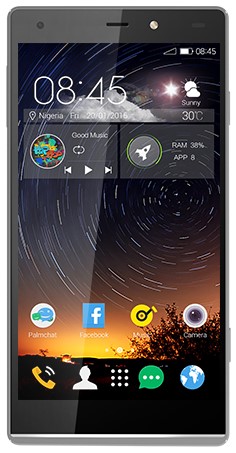
Tecno Camon5 4G LTE Android 5 Phone
Tecno Camon C5 is one of a few cheap Android phones with 4G LTE support. This means superfast downloads and streaming. Tecno Camon C5 features a 5-inch display and runs on Android 5.0 (Lollipop).

On the back the smartphone offers an 8 megapixels camera with dual-LED flash. A 2MP camera with Flash is offered on the front side. Tecno Camon C5 sports a 1.3GHz quad-core processor and 1 GB RAM.


Samsung Galaxy J2

Samsung Galaxy J2
Samsung Galaxy J2 is another affordable Android phone with 4G LTE support. In fact, it appears to be the cheapest Android phone from Samsung to offer 4G LTE.

Aside support for superfast internet, the Samsung Galaxy J2 offers a 4.7-inch Super AMOLED display, a 5MP rear camera, and a 2MP front camera.

It runs Android 5.1.1 (Lollipop) on a 1.3GHz quad-core processor with 1GB RAM. Price starts at

Lenovo Vibe P1m

Lenovo Vibe P1m
Lenovo Vibe P1m is more or less a stripped-down version of the Vibe P1. It features an impressive 4000 mAh battery as well as superfast 4G LTE.

Lenovo P1m features a 5.0-inch display with a 5MP front camera and an 8 MP rear camera. The smartphone runs on Android 5.1, powered by a 1GHz quad-core processor and 2GB RAM.

The Android phone is splash proof with a price tag ranging from 37,500 to 45,000 Naira

Tecno Camon C8

Tecno Camon C8 Phablet
Tecno Camon C8 is one of the best Cheap Android Phones in Nigeria. It offers an attractive design and a brilliant 5.5-inch display with a 13MP rear facing camera with dual-LED flash and a 5MP front facing camera.

Tecno Camon C8 runs on Android 5.0 (Lollipop), powered by a 1.3GHz quad-core processor with 1GB of RAM and a decent 3000 mAh battery. Price starts at around 34,000 Naira.

Lenovo A1000

Lenovo A1000
Lenovo A1000 is one of the best affordable Android phones in Nigeria. It features a 4.0-inch display and is powered by a quad-core processor with 1GB of RAM.

Lenovo A1000 runs on Android 5.0 (Lollipop). Price starts at 19,000 Naira.

Samsung Galaxy J1

Samsung Galaxy J1
Samsung Galaxy J1 is an affordable dual-SIM smartphone and one of the best cheap Android phone from Samsung. It's main downside is the small 512MB RAM.

The Galaxy J1 sports a 4.3-inch screen with a 5 megapixels rear camera and a 2 megapixels front facing camera. Price starts at 20,000 Naira.

Lenovo A5000

Lenovo A5000
Lenovo A5000 is one of the best entry level smartphones in Nigeria with its brilliant display, decent set of cameras, and good battery life.

Lenovo A5000 is powered by a 1.3GHz quad-core processor with 1GB of RAM and runs on Android 4.4.2 (KitKat). Price starts at 23,000 Naira, making a really cheap Android phones to checkout.

Innjoo Halo

Innjoo Halo
Innjoo Halo is Innjoo's latest entry level phone. It offers an attractive design at an affordable price. The Innjoo Halo offers on of the best battery life for Android phones in its price range with a 3200 mAh battery.

Innjoo Halo features a 5-inch display and a 5 megapixels rear camera with a 2MP front camera. It runs Android 4.4 (KitKat) on a 1.2GHz quad-core processor with a 1GB RAM.

Innjoo Max 2
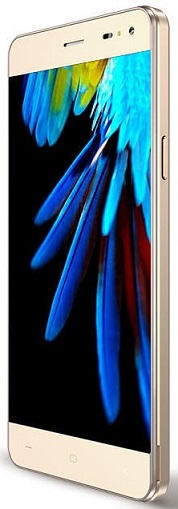
Innjoo Max 2
The Innjoo Max 2 sports a 5-inch diagonal display with an HD resolution of 1280 x 720 pixels. It sports a big battery at 4000 mAh battery.

Innjoo Max 2 runs Android 5.1 (Lollipop) on a 1.3GHz quad-core processor with 1GB RAM. Price starts at 35,000 NGN.


Infinix Hot Note

Infinix Hot Note
Though the name may sound like it is just a bigger version of the Infinix Hot, however the Hot Note is not just big. It features a bigger battery and a better camera.

Infinix Hot Note is powered by an octa-core processor with 1GB of RAM. It is one of the best value phablet in Nigeria with its 5.5-inch display.


Hot Android Phones

So, there goes our list of cheap Android phones. More low cost Android phones are available in the market. Cheap Android phones are very popular in Nigeria and other emerging markets like Ghana, Kenya, South Africa, and India.

Compare Prices of Android Phones in Nigeria.

However, buying cheap Android phones it is important to know that they are limited in performance. Some cheap Android phones are accused of being too slow, having to short battery life, heating up under usage, and consuming too much data.

So, when buying cheap Android phones, you have to be realistic with your expectation.

Samsung's Galaxy TabPro S is thin, powerful and ready to work

Galaxytabprosthumb
Image: Mashable, Lance Ulanoff


Cyntexfones highlights the products and services we've tested and would recommend to others. Consider it Liked, Favorited, +1'ed and Pinned.

If you look at Samsung’s new TabPro S and think, “a Surface pro knock-off,” you’re not looking in the right direction. Samsung modeled this tablet/PC hybrid on Apple’s brand new, giant iPad Pro.
Sure the TabPro S runs Windows 10 and has a detachable keyboard/screen cover, but the core chassis has more in common with the iPad Pro than it does Microsoft’s Surface Pro 4. Both have exactly two ports. The Surface Pro has a display Port, USB, a mini display port and a micro SD card slot. And while the Surface Pro 4 uses a built in, fully adjustable kickstand, the iPad Pro and TabPro S both use folding keyboard covers to prop them up.
I am, admittedly a big fan of the Surface Pro 4 and I really like the iPad Pro. Now I realize that I like almost anything that can offer me true laptop-level productivity in an ultralight form factor. The Samsung Galaxy TabPro S fits that bill.
The Intel Core M3-sporting, $899.99 system is not as attractive as the iPad Pro and the included (!) keyboard doesn’t have the same great chicklet keys, as large a trackpad or type feel as the Surface Type cover, but it generally acquits itself nicely in all areas.

Good Looks and lapability

The 12-inch tablet is slightly smaller than the iPad Pro, but roughly equal to the Surface Pro 4. It weighs a pound and a half without the screen cover, which means it has some heft, but is also roughly equivalent to the iPad Pro (1.53 lbs., for the TabPro S and 1.57 lbs. for the iPad Pro). The TabPro S can feel a little heavier because that weight is squeezed into a smaller frame. That feeling becomes more pronounced when you attach the keyboard cover which wraps around both sides of the device. Apple iPad Pro folds the keyboard under one side of the cover.
Galaxy TabPro S with cover
The Galaxy TabPro S comes with a cover that converts into a stand and full-sized keyboard with touch pad.
Screen wise, the Samsung Galaxy TabPro S features the first Super AMOLED on a Windows 10 tablet. At 2160 X 1440, it’s super sharp and impressively bright, though, both the Surface Pro 4 (2736 x 1824) and iPad Pro (2732 x 2048) offer higher resolutions. That screen technology let Samsung make the TabPro S even thinner than the Surface Pro 4, which uses LCD technology, and slightly thinner (less than a millimeter) than the iPad Pro. For better or worse that means there is no standard USB port. Instead, it has a USB-C port that you’ll use for charging and data. If you’re like virtually everyone I know, you’ll have to buy a USB-C-to-USB adapter. I found one from Satechi and even though the system said it didn't recognize the USB device, it worked just fine.
Galaxy TabPro S
Galaxy TabPro S's USB-C port.
Image: Mashable, Lance Ulanoff
Like most other systems of its class, the TabPro S includes a visible set of copper connectors along one long edge that are paired with powerful hidden magnets. When aligned with a channel in the keyboard cover, the TabPro S snaps smartly into place and the remainder of the cover snaps onto the back of the tablet. There’s a cutout in the cover for the camera (despite being just 5 MP, it still sticks out of the tablet). That combo of the cutout and the camera add extra support for the screen.
The cover affords two adjustment settings: roughly 60-degrees, which is what you’ll use most often and around 20 degrees. I used the first setting most of the day (I tried 20-degrees, but that’s best for drawing). It was good on the desk and in my lap, but I really prefer more adjustment options. Even the iPad Pro with Smart Keyboard’s roughly 45-degree is more comfortable.
Samsung Galaxy TabPro S
Samsung's Galaxy TabPro S has two recline settings. This one is best for drawing.
Image: Mashable, Lance Ulanoff

Windows 10

If you’ve been using Windows 10 on any touchscreen device, the experience on the TabPro S will feel familiar. Windows 10 is Microsoft’s best operating system in nearly a decade. As a Windows device, the Galaxy TabPro S doesn’t necessarily bring anything fresh to the table, but that’s primarily because a couple of key features were not ready to test.
There’s no Intel RealSense camera in the TabPro S, which means using Windows Hello to log-in with your face is a no-go. However, Samsung came up with a nifty substitute: Flow. The app uses the TabPro S’s built-in Bluetooth to connect to a Samsung Galaxy S7 phone. With the Flow app running on the TabPro S and the device paired with the phone, you can log into the PC simply by unlocking the phone (with your fingerprint or whatever other method you choose).
Too bad Flow wasn’t ready for me to test. Also, not a lot of people own the Galaxy S7. So maybe this isn’t such an awesome feature, at least not yet.
In addition, the TabPro S is pen-enabled and Samsung is working on a decent Bluetooth pen accessory for the device. I tried it during Samsung’s TabPro S unveiling and it worked fine, though I didn’t like the triangular body or too-sensitive buttons. Unfortunately, the actual pen wasn’t ready for review. You can, obviously, draw with your finger.

Performance and battery

The Samsung Galaxy TabPro S runs Intel’s new Core M3 CPU, the same chip you’ll find in the Surface Pro 4 (base model). It has solid benchmark numbers, but Apple’s A9X CPU far outstrips it.
Samsung Galaxy TabPro S
At left, you can see the Samsung Galaxy TabPro S's performance numbers. At right, some real world tests that included multiple browser windows, a 3D game and streaming video,
Image: Screenshots
In the real world, though, Core M3 held up surprisingly well. I opened over a dozen browser windows across two different Web browsers (Microsoft Edge and Google Chrome), let a Netflix movie stream in the background (which also gave me a chance to try out the excellent stereo speakers) and then played 3D Chess. The TabPro S didn’t lose a step. I did not try to run Adobe Photoshop CC (it is a mobile CPU, after all).
The TabPro S is rated for 10.5 hours of battery life, but like most battery estimates, that’s probably for video and nothing else. My mixed-usage day resulted in 6.5 hours, which is actually quite good.

Value

At $899.99, the Samsung Galaxy TabPro S is one of the better values in the ultraportable space. In additional to the excellent screen and pleasing performance, the device is packed with 4 GB of RAM and a 128 GB SSD (it is, however, one of the rare Samsung mobile devices without an expandable storage slot). The price also includes the keyboard. This is more or less comparable to the Surface Pro 4, which starts at $799 for the128 GB Intel Core M3 model (the Type Cover costs $129). The base iPad Pro, which has just 32 GB of storage, costs $799. Apple’s Smart Keyboard costs an additional $169.
The Samsung Galaxy TabPro S is not as powerful as the iPad Pro or a full-featured as the Surface Pro 4. There's no Windows Hello, no Trusted Platform Chip for business-level security and the 5 MP cameras, even though the rear one can shoot 1080p video, feel a little bit like after thoughts. Still, these are minor criticisms.
Samsung has deftly blended strong elements from both the Surface Pro 4 and the iPad Pro for a solid hybrid machine that should please both business users and students.

Samsung Galaxy TabPro S

The Good

Good design • Brilliant screen • Strong performance • Good battery life • Price includes keyboard

The Bad

Keyboard cover not adjustable enough

The Bottom Line

Samsung’s first tablet/PC hybrid offers a sharp design, solid performance and great value.


SHARE WITH FRIENDS AND MAKE COMMENT BELOW:


Read Also: 
------------------------------------------------------------------------------------

State of Android: Marshmallow and Lollipop keep growing market share

Last month Android 6.0 Marshmallow finally broke past the 1% mark in Google's market share report. It doubled its spread since December, but now its growth is finally picking up. In fact, at the beginning of March Android 6.0 was on 2.3% of devices out there, so it's grown by more than 100% in one month or so. Hopefully this means it will get its market share into the double digits soon.
Lollipop has finally become the most used version of the OS, taking KitKat's place with 36.1% of the market compared to 34.3%. While Lollipop has grown 2% from the previous report, KitKat has lost 1.2% of the pie. And it's bound to go down even more.
Jelly bean now has 22.3% market share, Ice Cream Sandwich is down to 2.3%, while Gingerbread is at 2.6% and Froyo's still holding on to 0.1% of the market.
In the coming months more and more devices should be graced with updates to Marshmallow, so that version will obviously keep on growing. So too should Lollipop, while every other Android release is basically on the way out now - if incredibly slowly.
Source | Via